
Fab Heavy Parts Explains the Real Differences Between OEM and Aftermarket Parts for Heavy Equipment
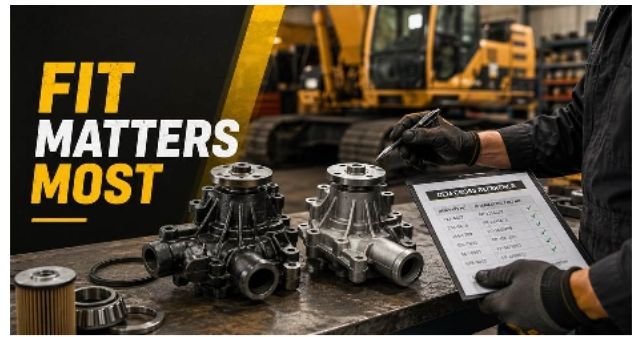
SAN FRANCISCO, United States – When machinery breaks down, equipment owners and maintenance professionals face a recurring decision: install original equipment manufacturer (OEM) parts, or aftermarket alternatives. Differences in sourcing, pricing, compatibility verification, and warranty terms often determine which one ends up on the machine.
The decision carries more weight than it once did. The Business Research Company estimated the global construction equipment aftermarket at approximately $28.75 billion in 2025, with annual growth projected at roughly 7 percent — a sign that sourcing replacement components from manufacturers other than the original producer has become a common practice.
Service life amplifies the trend. According to IMARC Group, diesel-powered equipment represented approximately 85 percent of new equipment sales in 2025, and such machines frequently remain in service for years beyond the original warranty period, when the parts decision often shifts to the owner or maintenance team.
Fab Heavy Parts, an online supplier of aftermarket hydraulic, fuel-system, and engine components, is among the digital sellers serving that out-of-warranty demand. The company organizes its catalog by machine make and model, including OEM cross-reference and compatibility data where available — an approach aimed at the category’s central problem: matching the part to the machine.
The term “aftermarket,” however, is often treated as a single quality tier. In practice, aftermarket components vary significantly in manufacturing standards, specifications, and intended applications, which is why correct fitment matters more than the category label itself.
OEM parts are manufactured by, or on behalf of, the original equipment producer, carry that manufacturer’s brand, and are built to the specifications of the equipment line they were engineered for.
Aftermarket parts, by contrast, are produced by independent manufacturers to replace original components in compatible machines. Identification commonly relies on OEM cross-reference numbers, which confirm that an aftermarket part corresponds to a specific original component. Caterpillar-compatible engine parts, for example, are typically matched to the original Caterpillar part numbers and engine models they replace.
In choosing between the two, warranty status is usually the first consideration. Some equipment warranties contain provisions related to the use of non-OEM components, so owners should review applicable terms before installation.
Safety-related systems call for additional scrutiny. Components tied to braking, steering, or other critical functions are typically held to stricter specification and service requirements, and for these, owners often place greater weight on manufacturer documentation and traceability.
For machines already outside warranty coverage, the decision usually comes down to verified compatibility and total repair cost. Confirming the OEM cross-reference number before purchase reduces the likelihood of installation issues, downtime, and returns.
Model variations add a final complication: machines that share similar names may contain different engines, production revisions, or component configurations. Bobcat-compatible loader parts, for instance, are generally cataloged against specific loader model series rather than the brand name alone. Confirming the exact model and engine variant is therefore part of any careful purchase.
“Getting the part to fit the machine the first time is the whole game in this category,” said Robin Davis, CEO of Fab Heavy Parts. “We document OEM cross-reference data across more than ten OE brands, so buyers can confirm the match before they order.”
For buyers, the company recommends a short verification routine before any purchase: locate the OEM part number on the old component, in service records, or in the equipment manual, then match it against the replacement’s cross-reference data rather than the product description. Buyers should also confirm the machine’s exact model and engine configuration, review what the warranty allows regarding non-OEM components, and check the seller’s return policy in case the fit is wrong. The company further advises weighing total repair cost — including delivery time and potential downtime — rather than the sticker price alone.
The practical divide in replacement parts, then, has never been OEM versus aftermarket. It is the right part versus the wrong one — and for owners willing to check a cross-reference number, staying on the right side of that line often starts with verifying the match before ordering.
About Fab Heavy Parts
Fab Heavy Parts is an online supplier of aftermarket hydraulic, fuel-system, and engine components for heavy machinery, serving fleet operators, repair shops, service centers, and equipment owners across multiple markets. The company lists parts by machine make and model, with OEM cross-reference and compatibility data across more than ten engine and equipment brands.
Media Contact
Company Name: Fab Heavy Parts
Contact Person: Robin Davis, CEO
Email: Send Email
City: SAN FRANCISCO
Country: United States
Website: https://www.fabheavyparts.com/


